Document Management:
Organize documents using structured libraries, metadata, version control, permissions and consistent naming practices.
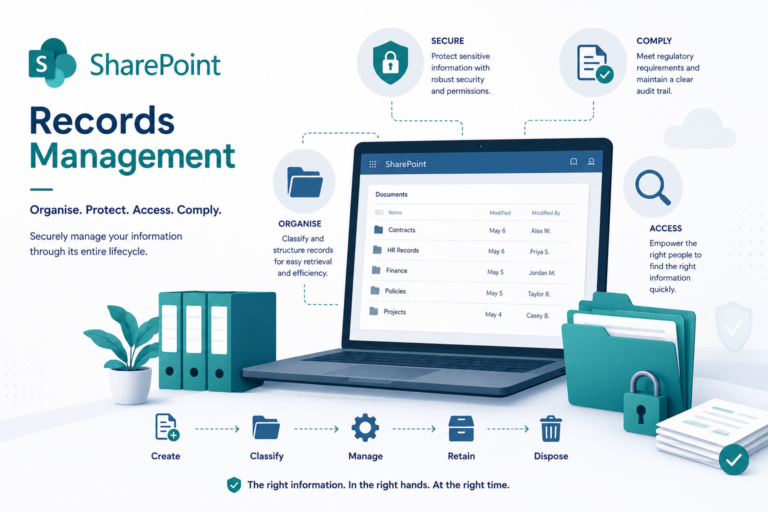
Records Management:
Apply lifecycle controls, retention requirements, audit trails and controlled disposal to organizational records.
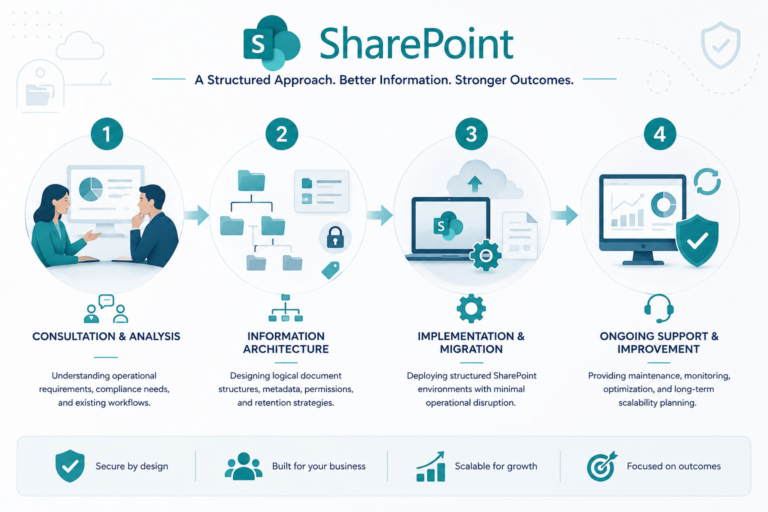
Information Architecture:
Create logical structures that help users classify, navigate, search and retrieve information efficiently.
Workflow Automation:
Automate approvals, notifications, routing, reviews and other repetitive information-management processes.
Search and Retrieval:
Improve access to information through metadata, filters, structured content and effective search configuration.
Migration and Data Ingest:
Migrate documents and associated metadata from shared drives, legacy systems and existing repositories into SharePoint.
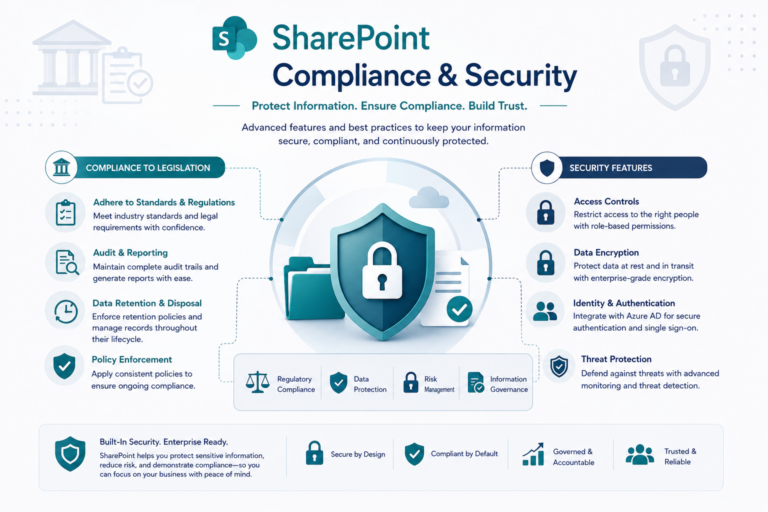
Security and Permissions:
Implement role-based permissions, secure access and governance controls aligned with organizational responsibilities.
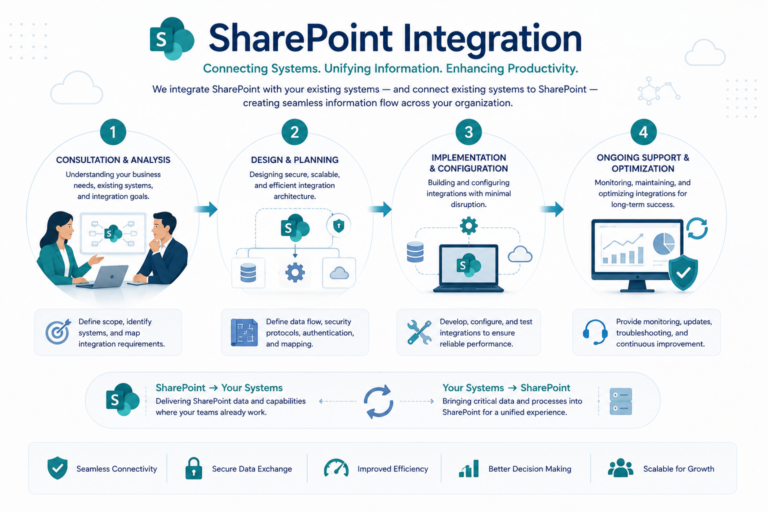
Microsoft 365 Integration:
Connect SharePoint with Microsoft 365 services and approved business systems to improve collaboration and information flow.